

Google PMax Best Practices 2026: Boost Performance & ROI
Google Ads · 2026 update
Performance Max is more transparent than it was a year ago. The 2026 playbook is: give the system better business data, set clear boundaries, inspect what it did, and test the next change deliberately.
What changed in Performance Max for 2026?
Performance Max is still Google’s cross-channel, goal-based campaign type. It can serve across Search, YouTube, Display, Discover, Gmail, and Maps. Google positions it as a complement to keyword-based Search, not a universal replacement for every Search campaign. That distinction matters because PMax is strongest when you want Google to optimize toward a business goal across inventory, while standard Search remains useful when query-level control is central to the job. Google’s Performance Max overview explains that role.
“Performance Max is a goal-based campaign type that allows you to access all Google Ads inventory … from a single campaign.”
Google Ads Help
The bigger change is visibility. Advertisers can inspect channel performance, search terms, landing pages, and detailed asset metrics. Campaign-level negative keywords are available for Search and Shopping inventory, and search themes can provide up to 50 additional intent signals per asset group.
| Area | 2026 capability | Practical use |
|---|---|---|
| Search guidance | Up to 50 search themes per asset group | Add distinct terms buyers use when your website, feed, or creative does not already make that intent obvious. |
| Search control | Campaign-level and account-level negative keywords | Exclude irrelevant queries without blocking useful demand across the entire account. |
| Brand control | Brand exclusions | Keep a PMax campaign from relying on branded Search demand when that is not the campaign’s job. |
| Landing pages | Final URL expansion, URL exclusions, and page feeds | Let Google find relevant pages while protecting careers, support, policy, or other non-commercial areas. |
| Reporting | Channel, search-term, landing-page, and asset reporting | Diagnose where results come from instead of judging only the campaign total. |
| Testing | Performance Max experiments | Test meaningful changes rather than repeatedly editing a live campaign and guessing what caused the result. |
That makes the 2026 question less about whether PMax is a “black box” and more about whether you use the controls now available. TrueFuture’s Social Demand Loop uses the same operating principle: attention only becomes useful when the next step, capture, measurement, and learning are connected.
What should PMax optimize toward?
The quality of the conversion signal matters more than the number of campaign settings. If your account tells Google that a newsletter signup, a qualified sales opportunity, and a completed purchase are equally valuable, automated bidding has no reason to distinguish them. Start by deciding which event actually represents business progress and whether different outcomes deserve different values.
For ecommerce, that usually means revenue or another value that reflects real economics. For lead generation, it means moving beyond raw form fills when you can. Qualified-lead stages, offline conversion data, and enhanced conversion setups can give the bidding system a better signal about which inquiries turn into real opportunities. Google’s Performance Max FAQ recommends mapping the lead-to-sale journey and optimizing toward higher-value actions as data improves.
If conversion values are reliable, value-based bidding can be more useful than optimizing every conversion equally. Google reports that advertisers moving from a Target CPA approach to Target ROAS saw, on average, 14% more conversion value at a similar return on ad spend in its cited aggregate data. Treat that as Google’s benchmark, not a forecast for your account. Your economics, conversion volume, attribution quality, and sales cycle still determine whether value-based bidding is appropriate. Google’s Performance Max FAQ provides the benchmark and its context.
Audience signals are guidance, not hard targeting. Use Customer Match or other first-party segments to show Google what valuable customers look like, but expect PMax to expand beyond them. Google specifically recommends first-party data as a signal for helping the system understand high-value customers.

A practical measurement hierarchy
Use the closest business event you can measure reliably, then keep earlier actions as supporting signals. A completed purchase or accepted opportunity can be primary. Product-page views, form starts, or video engagement can help explain behavior, but they should not automatically receive the same bidding weight as the outcome you actually value.
TrueFuture synthesis. This is an operating model, not an official Google Ads diagram.
How should you structure campaigns and assets?
The old advice to split campaigns until every audience or product has its own container often creates thin data and unnecessary competition. A better rule is to separate campaigns when the business objective, budget, geography, product economics, conversion goal, or required control is genuinely different. Inside a campaign, use asset groups to organize distinct product lines, themes, or use cases that need different creative and landing-page logic.
For retail PMax, avoid overlapping product sets between asset groups when you are trying to interpret asset-group performance. Google’s troubleshooting guidance specifically warns against targeting the same products across several asset groups when you expect clean separation. For non-retail campaigns, the same logic applies conceptually: structure around real message and offer differences, not around arbitrary audience personas that Google can already explore through automation.
Use search themes as guidance, not keywords
Search themes are optional, additive signals. Google can use up to 50 per asset group, and the system may still serve beyond them when it predicts relevant demand. The best themes add something the website or product feed does not already communicate. A home-energy product brand, for example, might add “backup power for outages,” “whole home battery,” and “solar storage” if those are distinct buyer intents. Repeating close variants adds less value. Google’s search themes guidance recommends distinct, incremental themes.
Give the system enough creative range
Every asset group should cover the major creative types it can use: text, images, and video. PMax can generate or enhance assets, but advertiser-supplied creative is still your opportunity to show the product accurately, answer objections, demonstrate use, and preserve brand standards. A feature list is not proof. For high-consideration products, product demonstrations, expert explanations, customer evidence, comparisons, and real use cases usually give the system more meaningful material than another generic lifestyle image.
Asset-level metrics are now far more useful, but do not over-read them. Google says PMax asset reports can show conversions, conversion value, impressions, clicks, and cost. It also warns that asset metrics are not additive because several assets can appear in one ad, and that ratios such as CTR, CPA, or ROAS at the asset level are directional rather than a clean measure of one asset in isolation. Google’s asset-level metrics documentation explains those limitations.
Which controls should you use?
Automation works better when it has room to find demand, but “room” does not mean giving the campaign permission to go everywhere. The 2026 best practice is broad but bounded: allow useful exploration, then use explicit exclusions where the business case is clear.
1. Campaign-level negative keywords
Performance Max now supports negative keywords at the campaign level as well as the account level. They apply to Search and Shopping inventory. Use campaign negatives when a term is wrong for one campaign but could still be useful elsewhere. Use account-level negatives only when the exclusion is appropriate across the account. Review the search terms report first so you are excluding observed waste or brand risk, not merely guessing. Google’s PMax negative keyword documentation covers the current behavior.
2. Brand exclusions
If the purpose of a campaign is incremental non-brand acquisition, brand exclusions can keep branded Search traffic from making the campaign look stronger than it really is. They are also useful when a partner or competitor brand must be excluded. Do not exclude your own brand by habit if branded demand is intentionally part of the campaign’s role.
3. Final URL expansion and page feeds
Final URL expansion lets PMax send users to another relevant page on your domain when Google predicts it is a better match. That can be useful on a large product or content-rich site, but it also creates a quality-control job. Exclude careers, support, legal, out-of-stock, or informational pages that should not become ad destinations. Use page feeds when you want to prioritize or constrain the set of eligible pages. Google’s Final URL expansion guidance explains page feeds and URL controls.
Pre-launch PMax control checklist
- Primary conversion and conversion value reflect the business outcome.
- Location targeting matches where the business can actually serve customers.
- Brand exclusions match the campaign’s acquisition job.
- Campaign and account negative keywords have distinct purposes.
- Search themes add new intent rather than duplicate your site copy.
- Final URL expansion has explicit exclusions for non-commercial pages.
- Every asset group has useful text, image, and video coverage.
- Customer Match or other first-party segments are current and permissioned.
- UTMs, Google Ads conversions, and downstream sales or purchase data can be reconciled.
- You have a review date, not a plan to edit the campaign every day.
How should you read PMax reporting now?
Start with the campaign’s business goal, then move down into the reports that explain it. The channel performance report shows how PMax is contributing across Google inventory. The search terms and landing pages report shows which queries triggered Search activity, what ad format served, and which landing page received traffic. Asset reporting shows how individual creative elements participate in delivery.
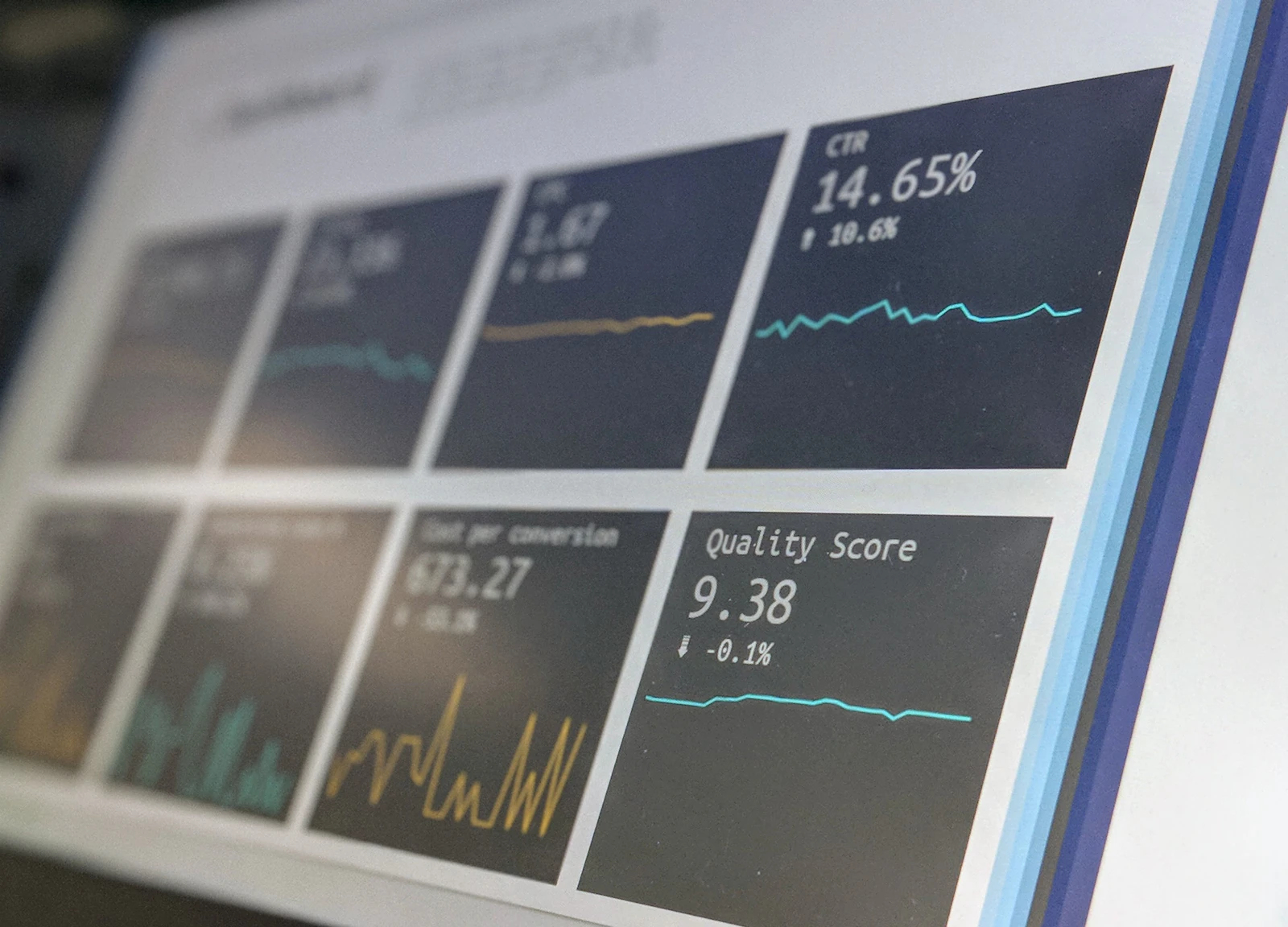
The useful sequence is: first ask whether PMax is hitting the conversion or value goal. Then ask which channels, queries, landing pages, products, and assets are contributing. If lead quality is poor, the fix may be conversion setup rather than creative. If Search terms are irrelevant, use negatives or better themes. If a landing page is weak, change the handoff instead of blaming the channel.
Google’s channel performance report lets advertisers drill into channel and format contribution. Its PMax search terms and landing pages report adds query, ad-format, and landing-page context. That is enough visibility to move beyond the old habit of judging PMax only as one blended line item.
Useful walkthrough: channel performance reporting
Google Ads published a tutorial showing how to use channel performance reporting inside Performance Max. It is useful if you want to see the current report layout before working through an account.
Watch “Google Ads Tutorials: Channel performance reporting in Performance Max” on YouTube.
Google Ads, published August 25, 2025. Linked rather than embedded because embeddability was not independently verified for this article.
For broader measurement, connect PMax reporting to the same event definitions you use in analytics and CRM reporting. If those systems disagree, investigate before declaring a winner. TrueFuture’s guide to GA4 reporting for business owners covers how to define and read meaningful site actions without treating every engagement metric as a business result.
How should you test and scale?
Remove the old rule that every budget increase should be about 20% followed by exactly 7 to 10 days of waiting. There is no universal Google requirement for that formula. The more defensible rule is to avoid frequent, large changes, especially while Smart Bidding is learning, and evaluate performance over at least a meaningful conversion cycle.
Google currently recommends giving a new PMax campaign at least six weeks before a full evaluation, with an initial ramp period and enough time to account for conversion delay. After significant changes, Google commonly advises allowing about one to two weeks, or at least one full conversion cycle, for the system to stabilize. Google’s current PMax optimization guidance provides those ranges.
Use experiments when the question matters
Performance Max experiments can test incremental lift and eligible campaign approaches. That is a better way to answer “did this change help?” than swapping several assets, changing budget, tightening ROAS, and adding exclusions in the same week. Change one strategic variable, document the hypothesis, and set a review window before the test starts.
Human oversight still matters
PMax can automate bidding, placements, combinations, and some creative generation. It cannot decide whether a product claim is legally supportable, whether a lead is truly qualified, whether a margin target makes sense, or whether the landing page is making a complicated product easier to trust. Those are business decisions.
That is also why TrueFuture does not treat paid media as an isolated channel. The useful question is whether the product explanation, social proof, paid creative, landing path, and measurement are learning from the same buyer decision. You can see how we separate operator experience from agency-owned evidence on the Founder Track Record & Work page.
Key takeaways
- Optimize toward business value, not the easiest conversion to collect.
- Use first-party data and Customer Match as guidance, not a substitute for clean conversion tracking.
- Use search themes to add missing intent signals. You can add up to 50 per asset group.
- Use campaign negatives, brand exclusions, and URL controls to create deliberate boundaries.
- Read channel, search-term, landing-page, and asset reports together.
- Treat asset-level ratios as directional because assets are often served in combinations.
- Test one strategic variable at a time and allow enough time for learning and conversion delay.
- Do not expect PMax to repair a weak offer, unclear proof, or a broken conversion path.
Frequently asked questions
How many conversions does Performance Max need per month?
There is no single public Google rule that every PMax campaign must reach 20 or 30 conversions per month. More useful conversion data helps Smart Bidding learn, but the needed volume depends on the conversion cycle, value signal, budget, and objective. Treat rigid thresholds as heuristics. Ask whether the bid strategy has enough high-quality data to distinguish useful outcomes from noise.
Should I use campaign-level negative keywords in PMax?
Yes, when you have clear evidence that a search term is irrelevant, unsafe, or wrong for that campaign. Campaign-level negatives are more precise than account-level exclusions because they do not automatically block the term across every campaign. Remember that PMax negative keywords apply to Search and Shopping inventory, not every placement type.
Should I turn off Final URL expansion?
Not by default. Final URL expansion can help PMax match a search to a more relevant page on your site. Keep it on when the site has strong commercial pages and you can manage exclusions. Turn it off, or constrain it with page feeds and URL rules, when only specific landing pages should receive paid traffic or when the site contains many pages that would create a poor ad experience.
Performance Max is easier to steer when the business inputs are clear
The 2026 version of PMax gives advertisers more reporting and more controls than the 2025 article reflected. That does not make campaign management automatic. It changes the job. The work is to define the outcome, feed Google useful signals, protect the boundaries, inspect what happened, and make the next change based on evidence.
If your campaign is getting cheaper conversions that do not become customers, or if creative, landing pages, organic content, and paid media are learning separately, the problem may sit outside the campaign settings. Fix the signal and the handoff before asking automation to scale it.
Need to connect paid demand to the rest of the buyer journey?
TrueFuture Media is built for established, high-consideration businesses where buyers need explanation, proof, and a clear next step. We do not position standalone media buying as the whole answer. A Fit Review can determine whether the larger issue is measurement, product explanation, proof, creative supply, or the conversion handoff.
Core engagements start with a $3,500 Social-to-Business Diagnostic or an $18,000 90-Day Social Demand Launch. Done-for-you ongoing systems start at $4,500/month. Advisory-only support is $3,000/month. See current services, scope, and pricing.
Request a Fit ReviewSources
- Google Ads Help: About Performance Max campaigns. Accessed September 19, 2026.
- Google Ads Help: About the channel performance report for Performance Max. Accessed September 19, 2026.
- Google Ads Help: About the search terms report in Performance Max. Accessed September 19, 2026.
- Google Ads Help: About asset-level metrics. Accessed September 19, 2026.
- Google Ads Help: Negative keywords in Performance Max campaigns. Accessed September 19, 2026.
- Google Ads Help: Use search themes with your Performance Max campaign. Accessed September 19, 2026.
- Google Ads Help: About Final URL expansion. Accessed September 19, 2026.
- Google Ads Help: Answering your top questions about Performance Max. Accessed September 19, 2026.
- Google Ads Help: Optimization tips for Performance Max campaigns. Accessed September 19, 2026.
- Google Ads Help: About Performance Max experiments. Accessed September 19, 2026.
Media credits
- Photo by Myriam Jessier on Unsplash. The page identifies the subject as a Google Analytics 4 interface and states it is free to use under the Unsplash License.
- Photo by Stephen Dawson on Unsplash. The page identifies the subject as a data reporting dashboard and states it is free to use under the Unsplash License.
- Video: Google Ads Tutorials: Channel performance reporting in Performance Max, Google Ads, published August 25, 2025.